Address
304 North Cardinal St.
Dorchester Center, MA 02124
Work Hours
Monday to Friday: 7AM - 7PM
Weekend: 10AM - 5PM


 Byadmin
Entering tax season often brings anxiety among small business owners in Malaysia. If your financial files are not organized, you not only risk being penalized by the Inland Revenue Board (IRB) , but you may also miss out on various incentives and tax deductions that should help your company’s cash flow.To ensure you don’t panic as the deadline for filing your forms (whether Form B, Form P, or Form C) approaches, you need a comprehensive reference guide. This article provides a
Malaysia tax checklist specifically designed to help entrepreneurs systematically prepare business documents, maximize legitimate tax relief, and avoid costly mistakes that could invite high-risk audits.Let’s take a step-by-step look at this
Malaysia tax checklist to ensure your business tax preparation runs smoothly and is audit-proof.
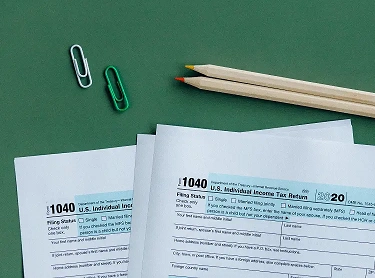
The Importance of Proactive Tax PreparationMany owners of Enterprises or Private Limited Companies (Sdn Bhd) in Malaysia adopt a reactive attitude—that is, they are only busy looking for receipts and checking bank accounts a week before the ezHasil system closes. This attitude is not only tiring, but also very detrimental.When you manage your accounts regularly throughout the financial year, you can plan your capital expenditure wisely. Using
the Malaysia tax checklist as a monthly workflow allows you to clearly see which expenses can be deducted from your gross income. As a result, your company’s taxable income can be legally reduced, saving you thousands of Ringgit which can be reused for business working capital.
Step 1: Business Structure Verification & LHDN DeadlineThe first thing in any standard
Malaysian tax checklist is to identify your business entity type and the deadlines set by the authorities. Each entity type has different responsibilities and timelines under the Income Tax Act 1967.
If you overlook the basic components of this
Malaysian tax checklist , your company may be subject to a late filing penalty under Section 112(1) of the Income Tax Act 1967 which is calculated based on the percentage of tax payable.
Step 2: Preparation of Primary Financial Statements (Final)Before you or your tax agent log in to the ezHasil portal, make sure that all financial transactions for the assessment year have been balanced and finalized. You cannot fill out tax forms based on rough estimates or “guesstimates” alone.A complete financial statement must contain the following components:1. Profit & Loss StatementThis statement includes total gross income, cost of sales (Cost of Goods Sold – COGS), and all operating expenses such as rent, salaries, and utilities.2. Balance SheetThis document shows the position of assets (cash, inventory, equipment), liabilities (trade accounts payable, bank loans), and business owner’s equity at the end of the financial year.3. Cash Flow StatementShows cash inflows and outflows throughout the year, which is very important if your business uses accrual basis accounting.Including this account cleaning element into your company’s
Malaysian tax checklist ensures that tax agents don’t have to waste time (and charge extra fees) just to correct unbalanced ledgers.
Step 3: Separate Deductible ExpensesOne big secret to reducing corporate tax payments in Malaysia is to take advantage of expenses that are allowed for tax deductions under Section 33(1) of the Income Tax Act 1967. The general condition is that the expenses must be incurred
wholly and solely in generating business income.Business owners often get confused between business expenses and personal expenses. Therefore, this section of
the Malaysian tax checklist is critical to filtering your cash outflow:
[Perbelanjaan Kasar Syarikat]
      │
      ├─► Boleh Tolak (Sewa pejabat, gaji pekerja, kos pemasaran, faedah pinjaman perniagaan)
      │
      └─► Tidak Boleh Tolak (Sewa rumah peribadi, saman trafik, perbelanjaan hiburan domestik tanpa kaitan perniagaan)
Make sure expenses such as
employer EPF contributions , business liability insurance, and premises maintenance costs are categorized correctly to maximize your tax savings.
Step 4: Claim Capital AllowancesIn commercial accounting, depreciation of assets such as computers, machinery, and vehicles is treated as an expense. However, the IRB does not allow this accounting depreciation to be deducted directly from taxable income. Instead, you must claim
Capital Allowance .As part of a smart
Malaysian tax checklist management , ensure you keep an updated Fixed Asset Register to claim:
Failing to claim capital allowances means you miss out on a huge tax deduction opportunity on your company’s asset investments.
Step 5: Management of Supporting Documents and Receipts (Keep for 7 Years!)Based on Section 82 of the Income Tax Act 1967, any individual or company carrying on business in Malaysia
is required to keep complete business records for 7 years . This is a strict law and should not be taken lightly.If the IRB selects your company for a desk audit or field audit, and you fail to submit the original receipt, the tax deductions you have previously claimed will be cancelled, and you will be subject to an immediate penalty.Make sure your
Malaysia tax checklist includes physical or digital files for the following documents:
Since physical receipts with thermal ink easily fade within a few months, it is highly recommended to scan and store the document in a secure digital format such as cloud storage.
Step 6: Review of Special Tax Incentives & Double DeductionsMalaysia offers a variety of attractive tax incentives to stimulate the growth of certain sectors, especially for Small and Medium Enterprises (SMEs). If you want this article to serve as a
Malaysia tax checklist that will have a high impact on your company’s finances, you need to check if your business is eligible for:
Regularly reviewing these incentives ensures that you do not pay more tax than you should according to the legal space provided by the government.
Step 7: Summary of Checklist Before Delivery (Final Verification)Before you press the “Submit” button on the LHDN portal, do a final check to ensure there are no technical errors that could trigger a red flag in the LHDN’s artificial intelligence (AI) system.Use this quick checklist in
Malaysia tax checklist for final verification:
| Review Items | Status (Yes/No) | Further Action |
|---|---|---|
| Are all income (including cash sales) included? | Check cash books and bank statements. | |
| Are personal expenses completely segregated? | Check the director/owner’s credit card transactions. | |
| Is the Capital Allowance calculation verified by an accredited party? | Refer to the calculations of a tax agent or accountant. | |
| Is the industry code (MSIC) entered in the form accurate? | Refer to your business’s SSM registration code. |
Kesimpulan: Automasi Kewangan untuk Persediaan Cukai Tanpa Tekanan
Menguruskan cukai perniagaan tidak sepatutnya menjadi satu mimpi ngeri tahunan yang mengganggu tumpuan operasi anda. Dengan menggunakan tax checklist Malaysia yang tersusun ini, anda boleh membina satu sistem pengurusan kewangan yang kukuh, telus, dan sentiasa bersedia untuk pematuhan undang-undang.
Langkah terbaik untuk jangka masa panjang adalah dengan beralih daripada sistem rekod manual atau hamparan Excel asas kepada perisian perakaunan awan (cloud accounting) yang mematuhi standard LHDN. Automasi ini bukan sahaja menjimatkan masa, malah memastikan perniagaan anda sentiasa berada pada landasan yang betul untuk berkembang ke tahap yang lebih tinggi dengan ekuiti kewangan yang selamat.